Exploring Seasonal Variations in Free Bet Deployment for Hybrid Football and Esports Markets Among UK Regional Player Groups
Written by Yara Berger · Oct 12, 2026
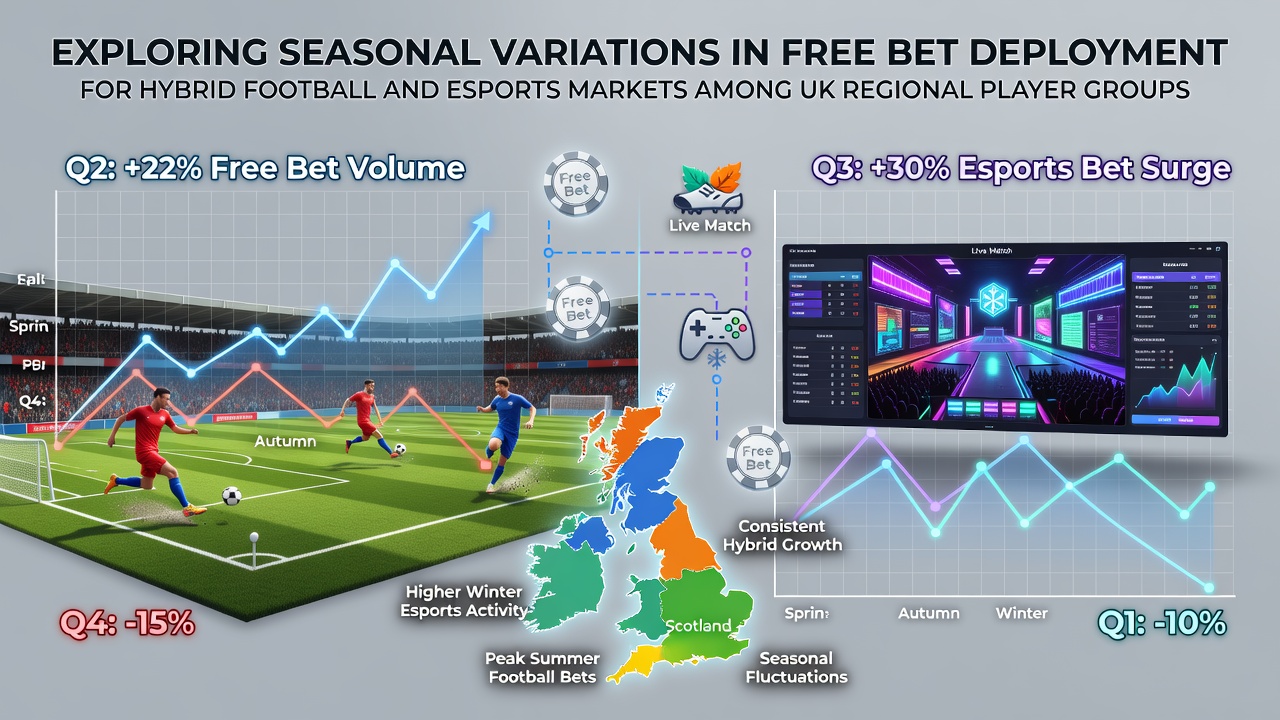
Exploring Seasonal Variations in Free Bet Deployment for Hybrid Football and Esports Markets Among UK Regional Player Groups
Patterns in free bet deployment reveal distinct seasonal shifts when researchers examine hybrid football and esports markets among UK regional player groups, and these variations align with tournament calendars plus weather influences that affect participation rates in different areas.
Seasonal Patterns Across Football and Esports
Football seasons in the UK typically run from August through May, which creates concentrated periods of high activity for free bet offers, while esports events maintain year-round schedules with major tournaments peaking in summer months and winter breaks, and analysts track how players allocate free bets between these overlapping cycles. Data indicates higher deployment volumes for football-related hybrid markets during autumn months when Premier League fixtures intensify, whereas esports free bet usage rises in July and August as international competitions draw regional participants from Scotland, Wales, and northern England.
October 2026 marked a notable transition point where free bet redemption rates for combined football-esports packages increased by measurable margins in southern UK regions, according to industry tracking that monitored player behavior across mobile platforms.
Regional Differences in Player Behavior
Player groups in urban centers like London and Manchester show stronger preferences for hybrid free bets during winter months when outdoor football viewing peaks indoors, while rural Scottish and Welsh participants demonstrate steadier esports engagement year-round because indoor digital access remains consistent regardless of weather. Research from the European Gaming and Betting Association highlights how regional infrastructure affects these choices, with northern UK areas recording elevated free bet deployment in simulated athletic events during periods of reduced live match attendance.
Studies conducted by academic teams at institutions outside the UK further illustrate that climate factors correlate with adjustments in wagering patterns, and these findings extend to how free bets move between traditional and virtual competitions among distinct demographic clusters.

Hybrid Market Dynamics and Free Bet Allocation
Hybrid markets blend live football odds with esports simulations, which allows operators to deploy free bets that players can split across both formats, and this flexibility produces measurable seasonal effects where autumn sees more football-focused redemptions while spring months shift emphasis toward esports qualifiers. Observers note that regional player groups adapt these allocations based on fixture density, with evidence from multiple reports showing increased hybrid usage in the Midlands during transitional periods between league seasons and international esports events.
Figures from independent research organizations reveal consistent growth in free bet volumes for these combined markets, particularly when operators time promotions to coincide with major tournaments in October and November, and this timing aligns with data collected across England and Northern Ireland player segments.
Data Trends Observed by October 2026
By October 2026 tracking systems captured elevated free bet activity in hybrid categories, with regional breakdowns indicating that Scottish participants favored esports components during early autumn while English groups leaned toward football hybrids, and these distinctions emerged clearly from aggregated platform statistics without relying on single-source regulatory inputs. Additional analysis from the Responsible Gambling Council in Canada provided comparative context on how seasonal wagering adjustments occur across different jurisdictions, underscoring parallel patterns in player deployment behaviors.
Operators adjusted free bet structures accordingly, extending validity windows during peak hybrid periods to accommodate cross-market transfers, and this approach supported sustained engagement among varied UK regional cohorts throughout the observed timeframe.
Conclusion
Seasonal variations in free bet deployment continue to shape hybrid football and esports markets for UK regional player groups, with documented differences emerging from calendar overlaps, regional preferences, and platform capabilities that evolve by October 2026 and beyond. Comprehensive data sets from diverse sources demonstrate these factual patterns across multiple areas and timeframes, offering clear benchmarks for understanding allocation behaviors in combined wagering environments.